Decemeber 4th, 2025
Expansion of the Wristwatch as a Fashion Item (1990s–2000s)
- Celebration of Craftsmanship and Exclusivity
- Fashion Icons, Celebrities, and "It-Watches"
- Watches in Urban Fashion
- The Swatch Influence
- Conclusion: From Past to Present
Table of Content
Celebration of Craftsmanship and Exclusivity
By the 1990s, the wristwatch had completed its transformation from a purely practical tool into a full-fledged fashion accessory. In earlier decades, as seen in the 1960s, watches began to reflect personal style even while serving utilitarian needs. But in the 1990s and 2000s, this trend exploded – a watch was now worn by choice, not necessity, often purely to make a statement. Electronic clocks, quartz watches, and later cell phones meant you no longer needed a mechanical watch to tell time. People started seeing mechanical wristwatches as collectibles and wearable art pieces, valued for craftsmanship and nostalgia instead of precision. In short, a wristwatch became part of your identity – an accessory saying as much about you as your clothes or car. The focus had shifted: what a watch symbolized was now more important than what it could do.
Far from dying out after the 1970s Quartz Revolution, mechanical watches roared back in the 1990s as luxury lifestyle icons rather than everyday tools. Swiss and high-end watchmakers intentionally reinvented their image. They moved away from advertising maximum accuracy or affordability, and instead highlighted heritage, craftsmanship, and exclusivity. Centuries-old brands leaned into their legacies. For example, Patek Philippe emphasized its long tradition of hand-finished excellence, and Rolex solidified its image as a status symbol by spotlighting classic models like the Submariner, Daytona, and Datejust. Omega refreshed its lineup by reissuing famous Speedmaster and Seamaster models and engaging in high-profile partnerships.

“Begin your own tradition” 1996 ad campaign. Image – Patek Philippe
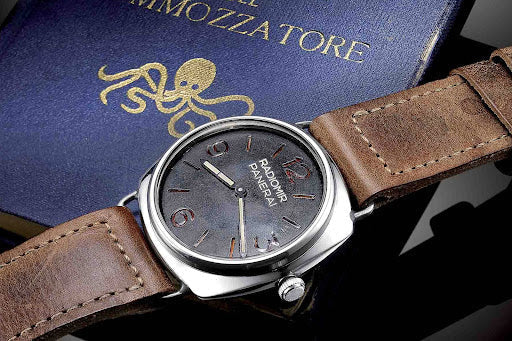
This era also saw once-niche designs become coveted fashion statements. Audemars Piguet’s bold Royal Oak – a distinctive octagonal watch originally from the 1970s – suddenly turned into one of the coolest and most desirable pieces for collectors in the ’90s. And a formerly obscure Italian military watchmaker, Panerai, was reborn as a luxury brand after 1993 – its oversized dive watches (with their big round dials and chunky crown protectors) became a hit for those wanting a rugged, sporty style on their wrist. Collectors and style-conscious buyers even welcomed brand-new independent watchmakers who treated watches like haute couture: creators like Franck Muller (founded in 1991) or Richard Mille (founded in 2001) introduced imaginative designs, limited editions, and complex mechanical features that turned heads. Mechanical complications – things like tourbillons, chronographs, or perpetual calendars – became badges of honor, appreciated not for utility but for the artistry and prestige they conveyed.

Richard Millie's first watch: RM 001 Tourbillon
Luxury watch fairs such as Baselworld and SIHH (Salon International de la Haute Horlogerie), later known as Watches and Wonders Geneva grew in prominence during this period, unveiling new models each year with the glitz and hype of fashion runway shows. This comparison is no exaggeration – brands were literally selling a lifestyle. A new watch wasn’t just a gadget, it was presented as a dream you could wear on your arm. By the 2000s, the mechanical wristwatch firmly reestablished itself not as a daily necessity, but as a symbol of taste, wealth, and appreciation for tradition.

Watches on display at the SIHH fair in 2017
Image credit: Simon de Burton from Swissinfo.ch – "SIHH sharpens contrast with Baselworld in battle of the watch fairs" https://www.swissinfo.ch/eng/business/display-time_sihh-sharpens-contrast-with-baselworld-in-battle-of-the-watch-fairs/43823638

The Patek Philippe exhibit at Baselworld in March 2019
Image credit: Robin Swithinbank from The New York Times – "SIHH sharpens contrast with Baselworld in battle of the watch fairs" https://www.swissinfo.ch/eng/business/display-time_sihh-sharpens-contrast-with-baselworld-in-battle-of-the-watch-fairs/43823638
Fashion Icons, Celebrities, and “It-Watches”
One huge reason watches became status and style items in the 1990s/2000s was the influence of pop culture and celebrity fashion. Watch companies realized that seeing a cool person wear a watch made other people want it. Thus began the age of watch brand ambassadors and style icons in horology.
In 1995, Omega made waves by signing supermodel Cindy Crawford for its “My Choice” ad campaign. Glossy images showed Cindy posing with her Omega Constellation watch and the tagline “Omega – my choice”. This was revolutionary in watch advertising. As Jean-Claude Biver (the marketing genius behind the campaign) explained, the quartz watch boom had made the watch’s timekeeping function secondary – so he marketed the watch as pure glamour and attitude instead. The strategy paid off massively: the Constellation became known to the public as “Cindy’s watch,” linking Omega with high fashion allure. In short, watches were now being sold as lifestyle items – a far cry from earlier days when brands bragged about waterproof depth or chronometer ratings. By the 2000s, it was common to see Hollywood actors, supermodels, musicians, and sports stars as official watch ambassadors. This gave watches a halo of celebrity sparkle.


Cindy Crawford was used for multiple models of the Omega Constellation collection under this campaign.
TAG Heuer featured golfer Tiger Woods in its ads, while Breitling enlisted actor John Travolta (a pilot himself) to underline its aviation heritage. Even the traditionally conservative Rolex tapped into this trend: their 1990s print ads quietly showcased artists, adventurers, and athletes wearing Rolex models – accomplished figures whose stories made the watches seem aspirational.


Meanwhile, movies and TV also turned specific watches into style legends. A prime example is James Bond’s watch. In the 1960s Bond era, 007 wore a Rolex, but in 1995’s GoldenEye the iconic spy switched to an Omega Seamaster Professional – a coup for Omega that increased their revenue in high degrees. The Seamaster’s prominent role on Pierce Brosnan’s wrist (complete with high-tech gadget features in the film) suddenly made it one of the decade’s most talked-about watches. A whole new generation associated Omega with James Bond’s cool factor, showing how a savvy product placement could turn a timepiece into a fashion must-have.

Likewise, in action films of the mid-90s, actor Sylvester Stallone made a bold statement by wearing an unusually large Panerai Luminor dive watch both on-screen and off. At a time when most watches were modestly sized, Stallone’s big chunky Panerai stood out – and fans loved the look. His championing of that watch (even ordering special editions for himself and friends) put Panerai on the map and kicked off a trend for oversized sports watches as macho fashion accessories. What had been a military tool watch was now a celebrity-endorsed style item.

Even new watch designers gained fame through celebrity adoption. The flamboyant mechanical creations of Franck Muller in the 1990s are a great example. Muller introduced fun, avant-garde designs – think brightly colored dials and unusual curved shapes – that broke the mold of stuffy old watches. These pieces struck a chord with fashion-forward VIPs. By the late ’90s, Franck Muller’s distinctive tonneau (barrel) shaped watches became the “it” watch to sport at red-carpet events. Everyone from film stars like Sylvester Stallone and David Beckham to pop culture figures like Elton John and Paris Hilton was seen wearing one. Elton John even called Franck Muller the “Picasso of watches,” because he made men’s watches artistic and exciting rather than plain. The runaway success of these flashy watches showed how much style and uniqueness mattered – a watch could be a conversation piece and fashion statement more than a timekeeper.
Muller became a style icon in horology through his creative designs. His inventive Color Dreams dials and curvy Cintrée Curvex cases attracted celebrities to his brand. By the end of the decade, wearing a Franck Muller watch signaled you had daring taste – pop stars, athletes, and actors all wore his pieces, making him an icon of fashionable watchmaking.

Franck Muller Cintrée Curvex
Watches in Urban Fashion
In the 90s and 2000s, music and fashion trends also elevated the wristwatch’s status. Nowhere was this more visible than in hip-hop culture. As mentioned, rap and R&B artists turned luxury watches into blinding jewelry pieces. The watch, in these circles, was worn purely to show one’s success, much like a gold chain or grill. It didn’t even matter if the diamonds made it hard to read the time! What mattered was that it looked expensive. Entire songs were written celebrating pricey watches: by the 2000s, references to brands like Rolex, Cartier, and Patek Philippe peppered the lyrics of chart-topping songs. This trend introduced luxury watch names to young audiences worldwide, further cementing watches as status fashion. And it wasn’t just music – urban streetwear in general adopted flashy watches as part of the look, often worn with designer sneakers and sports jerseys. This crossover of luxury watches into youth fashion was unprecedented. Even conservative Swiss brands took notice, as in the case of Audemars Piguet: its Royal Oak Offshore model (a big, modern chronograph) became hugely popular among hip-hop artists and athletes without the company even running a traditional ad campaign. By cleverly seeding Royal Oaks with trendsetters in New York and Los Angeles, AP gained a foothold in the “cool” crowd. The once-elite Swiss watchmaker earned street credibility, showing how far the wristwatch-as-fashion concept had come – from boardrooms and formal events right into pop culture and youth style.

Jay-Z wearing an Audemars Piguet Royal Oak Model Openworked Perpetual Calendar (Ref:25829BA.OO.0944BA.01). The watch was is a discontinued watch that first produced in the early 2000s.

The Swatch Influence
It’s important to note that not every 90s watch trend was about luxury or diamonds. The idea of the watch as a fun fashion accessory for the masses was popularized by Swatch in the 1980s and continued strong into the 90s. Swatch (a Swiss brand launched in 1983 during the Quartz Crisis) took the world by storm with its quirky, colorful plastic watches. These were inexpensive, battery-powered quartz pieces designed to be “casual, fashionable-yet-disposable” accessories – essentially the opposite of a precious heirloom. Swatches came in every design imaginable, from neon abstract art to pop culture graphics, encouraging people (especially teens and young adults) to own several and match them with outfits or moods. In 1986, Swatch even collaborated with artist Keith Haring on limited-edition watches, treating the wristwatch as a canvas for art. Later in 1992, a Swatch collaboration with fashion designer Vivienne Westwood made similar headlines. These collaborations were cool and unexpected – they attracted people who normally didn’t even wear watches. Swatch proved that a watch could be a trendy fashion statement as easily as a pair of shoes or a handbag. This concept trickled up and down the market: many fashion clothing brands (from Calvin Klein to Gucci) launched their own watch lines in the 1990s, treating them as extensions of their style collections. Whether high-end mechanical or cheap and cheerful quartz, watches were firmly entrenched as style accessories by the end of the 20th century.

Swatch Collaborations with Keith Haring

Swatch and Vivienne Westwood collaborated to create the Swatch Orb
Conclusion: From Past to Present
In the 1990s and 2000s, the wristwatch completed its evolution from a utilitarian timekeeper to a symbol of style, personality, and status. People wore watches to complement a power suit or streetwear outfit, to emulate their idols, or to indulge in a piece of craftsmanship – not because they needed to know the hour. Watchmakers responded by emphasizing design, heritage, and exclusivity, effectively turning timepieces into wearable luxury statements. This era built on the earlier seeds of change, but it went much further. By the new millennium, a wristwatch could be a fashion icon on its own: whether it was a $50 neon Swatch or a $5,000 Rolex, what it said about you was the key.